

Rafters vs. Trusses: Which Roof Framing Is Best for Your Build?
March 19, 2026
•
Written By
Roofscape
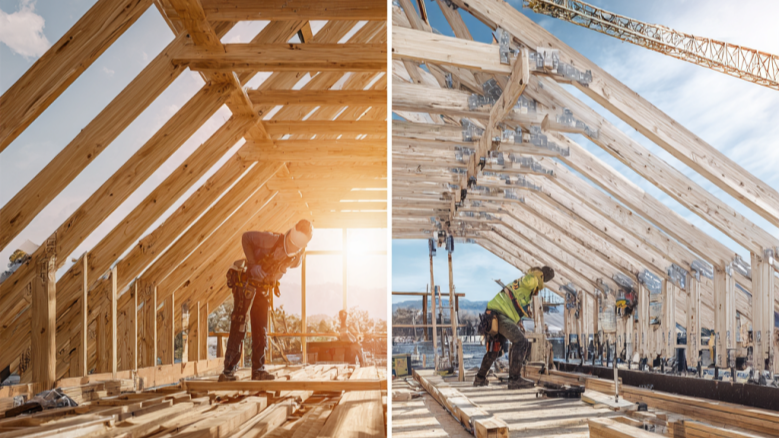
When it comes to building or replacing a roof, most people spend a lot of time thinking about shingles, gutters, and color. What they don't think about nearly enough? What's holding all of that up. The framing underneath your roof isn't glamorous, but it might be the most important structural decision you make. And right at the center of that decision is this: rafters or trusses?
These two systems have been competing for the top spot in roof construction for decades. Each one has real strengths. Each one has trade-offs. And choosing the wrong one for your build can cost you in ways you won't see coming. So let's break it down, plain and simple, so you can walk into your next conversation with a contractor actually knowing what you're talking about.
Key Takeaways
- Rafters are cut and assembled on-site; trusses are engineered and prefabricated in a factory.
- Trusses are generally faster to install and more cost-effective for straightforward builds.
- Rafters offer more usable attic space and greater flexibility for custom designs.
- Your roof pitch, span, load requirements, and budget all factor into which system is right for you.
- Working with an experienced local roofing contractor makes all the difference in getting this decision right.
.png)
What exactly are rafters, and how do they work?
Rafters are the traditional, stick-built approach to roof framing.
Rafters are individual boards — typically 2x8s or 2x10s — cut and installed on-site by a framing carpenter. They run from the ridge board at the peak of your roof down to the top plate of your exterior walls. Each rafter is measured, cut, and set by hand, one by one.
This method has been around for centuries, and there's a reason it stuck around this long. Rafters give you a large, open attic space that can be converted into living area down the road. They're also easier to customize if your home has a complex roof line with dormers, valleys, or irregular angles. For older home restorations or architectural builds where the design doesn't follow a standard template, rafters are often the go-to choice.
What are trusses, and why do so many builders prefer them?
Trusses are pre-engineered structural components built in a controlled factory setting.
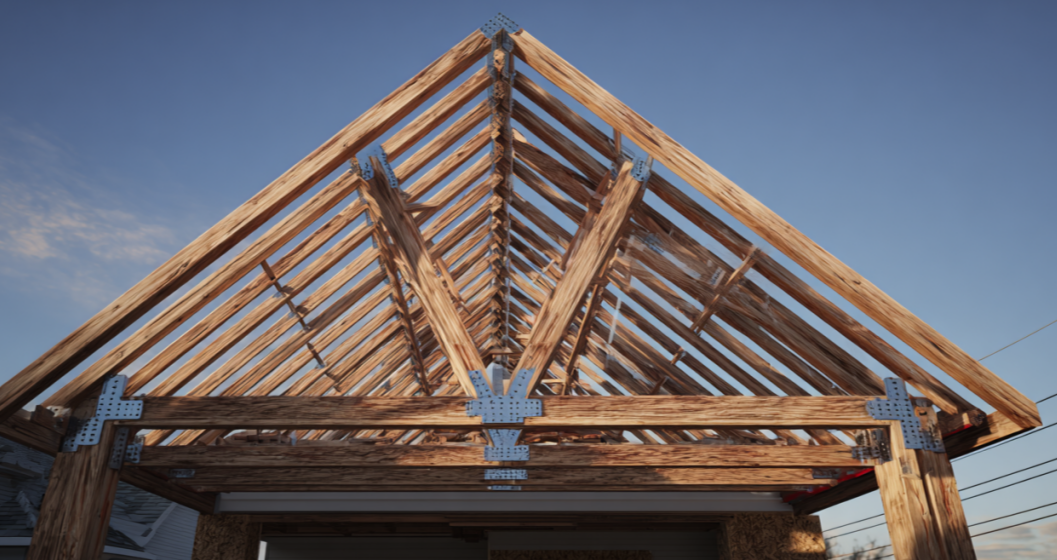
A roof truss is a pre-built triangular framework made from smaller pieces of lumber connected by metal plates. They're designed by engineers, fabricated off-site, and delivered to your job ready to install. A crane lifts them into place, and a crew can set an entire roof's worth of trusses in a single day.
That speed is a big deal in construction. Less time on-site means lower labor costs and fewer weather delays. Trusses are also highly consistent — every piece is built to exact spec, and they've been engineered to handle specific load requirements for your region. That kind of structural predictability is hard to beat on a standard new construction project.
How do the costs of rafters and trusses actually compare?
Trusses usually win on upfront cost, but the full picture is more nuanced.
Here's the honest breakdown. Trusses typically cost less overall when you factor in both materials and labor. The prefabrication process is efficient, and installation is fast. You're not paying a framing crew to spend days measuring and cutting on-site.
Rafters, on the other hand, require more skilled labor and more time. The materials can be comparable in price, but the man-hours add up. That said, if you're building something with a complex roof design or you want a finished attic, the extra cost of rafter framing can absolutely pay off. It's not just about the price tag today — it's about what you're getting for the life of the home.
Which roof framing system works best for different types of builds?
The right choice depends heavily on your specific project goals.
Here's a quick way to think about it: if you're building a straightforward residential home with a standard roof pitch and you don't need the attic for anything, trusses are probably your best move. They're efficient, reliable, and budget-friendly.
But if any of the following apply to your project, rafters deserve a serious look:
- You want to finish the attic as living space, a bedroom, or a bonus room.
- Your home has a custom or complex roof design with multiple ridges or dormers.
- You're adding onto an existing structure where truss delivery or crane access is limited.
- You're working on a historic or architectural restoration that requires traditional methods.
- Your lot has tight access that makes delivering large pre-built trusses difficult.
Neither system is universally better. They're tools, and the best tool depends on the job.
Does roof framing affect energy efficiency or insulation?
Yes, and it's worth thinking about before you build.
Trusses, because of their internal web of bracing, can make it trickier to insulate the attic fully. There's less clear space to work with, and insulation has to work around all those structural members. This isn't a dealbreaker, but it's something to plan for.
Rafter-framed roofs with open attic space tend to allow for more straightforward insulation installation. If energy efficiency is high on your list, talk to your contractor about how each framing method will interact with your insulation strategy. A good roofer will make sure these systems work together, not against each other.
Real Questions, Straight Answers
Can trusses be modified after installation?
Generally, no. Trusses are engineered as a complete system. Cutting or altering a truss without an engineer's approval can compromise the entire roof structure. If you anticipate needing to modify the attic space later, rafters offer much more flexibility.
How long do rafters and trusses each last?
Both systems, when properly installed and maintained, should last the full life of the structure — 50 to 100 years or more. The framing itself rarely fails. Problems arise from water intrusion, pest damage, or improper installation. A well-built roof keeps all of that at bay.
Do trusses require a permit?
Almost always, yes. Any structural roof work will require a building permit, and truss designs typically need to be stamped by a licensed engineer. Your contractor should handle this process, but it's worth confirming before work begins.
Are rafters better for metal roofing?
Not necessarily. Both rafter and truss systems can support metal roofing. What matters more is the pitch, load capacity, and how the sheathing is installed. A roofing contractor familiar with metal systems will know how to frame for it correctly regardless of which method you choose.
What's the best roof pitch for trusses?
Trusses are manufactured for a wide range of pitches, from low-slope to steep. Your manufacturer and contractor will help spec the right truss type for your design. Steeper pitches may limit truss options slightly, but it's rarely a barrier.
Ready to Frame It Right? Let's Build Something That Lasts.
Here's the bottom line. Roof framing isn't a place to guess, and it's not a decision to rush. Whether trusses or rafters are right for your home depends on your design, your goals, and your budget — and getting that call right from the start saves you a whole lot of headaches down the road.
If you're in Cumming, GA or the surrounding areas and you want a straight answer from people who know roofing inside and out, reach out to Roofscape. Their team brings the expertise, the honesty, and the craftsmanship to make sure your roof is built right the first time. No guesswork. No shortcuts. Just solid work from a crew that takes pride in what they build.
Contact Roofscape today and let's talk through what your project needs.
Recent Articles

Residential Roofing
How to Repair a TPO Roof: DIY Tips for Flat Roof Fixes
Regular inspection and roof repair are best things to do to extend the life of a TPO roof. When in doubt, a professional assessment costs far less than the water damage that follows a failed repair.
March 27, 2026
.png)
CDX Plywood vs. OSB: What’s Best for Roof Sheathing?
CDX plywood vs. OSB: compare cost, moisture resistance, durability, and performance. Learn which roof sheathing is best for your climate, budget, and long-term roofing needs.
March 26, 2026

Residential Roofing
What Are Roof Scuppers? A Guide to Flat Roof Drainage
Most people have heard of gutters and downspouts. Far fewer have heard of roof scuppers, on a flat roof scuppers might be doing more work to protect your building than any other single component.
March 20, 2026
Rafters vs. Trusses: Which Roof Framing Is Best for Your Build?
Rafters vs. trusses: compare cost, design flexibility, installation speed, and attic space. Learn which roof framing system fits your build, budget, and long-term goals.
March 19, 2026