

How to Repair a TPO Roof: DIY Tips for Flat Roof Fixes
March 27, 2026
•
Written By
Roofscape

Flat roofs have a reputation for being high-maintenance, and TPO roofing tends to get lumped into that story. But here's the truth: TPO — thermoplastic polyolefin — is actually one of the more durable and forgiving flat roofing systems on the market. It's energy-efficient, relatively lightweight, and when it's properly installed and maintained, it can last 20 to 30 years without much drama.
The drama usually starts when small problems get ignored. A tiny puncture. A seam that's starting to lift. A drain that's been slow for two seasons. Left alone, each of those issues becomes a much bigger conversation — and a much bigger invoice. So whether you're a hands-on homeowner who wants to handle minor repairs yourself or someone who just wants to know enough to have a smart conversation with a contractor, this guide is for you.
Key Takeaways
- TPO is a single-ply membrane roofing system commonly used on flat and low-slope roofs.
- Small punctures, minor seam lifts, and surface debris are often manageable with the right DIY approach.
- Heat welding and proper membrane adhesion are critical for lasting repairs — and are best left to professionals for anything significant.
- Regular inspection and maintenance are the single best things you can do to extend the life of a TPO roof.
- When in doubt, a professional assessment costs far less than the water damage that follows a failed repair.
What is TPO roofing and why is it so common on flat roofs?
TPO is a single-ply membrane that balances durability, energy efficiency, and cost.
TPO roofing is a single layer of synthetic membrane that gets rolled out and either mechanically fastened, fully adhered, or ballasted onto a flat or low-slope roof deck. It's typically white or light gray, which reflects UV rays and helps keep buildings cooler — a feature that matters a lot in warm climates like Georgia.
It became popular for commercial buildings first, then made its way into residential flat roofs, additions, and garage roofs. Contractors like it because it's fast to install. Building owners like it because it holds up well and keeps energy costs down. When it's installed correctly and maintained regularly, TPO earns its reputation as a dependable system.
What are the most common TPO roof problems homeowners face?
Most TPO issues come down to punctures, seam failures, and poor drainage.
Before you can fix something, you need to know what you're actually looking at. TPO roofs tend to run into a predictable set of problems, and most of them are detectable before they turn serious if you know what to look for.
The most common issues include:
- Punctures or tears from foot traffic, fallen branches, or HVAC equipment maintenance.
- Seam separation where two sections of membrane overlap and the bond begins to fail.
- Ponding water that sits on the roof longer than 48 hours after rain, accelerating membrane wear.
- Shrinkage at the edges and around penetrations like vents, pipes, and drains.
- Bubbling or blistering under the membrane caused by trapped moisture or air.
- Clogged or slow drains that back up water and stress the entire system.
- Flashing failures around curbs, walls, and rooftop equipment.
Catching any of these early is the whole game. A twice-yearly inspection — once in spring and once in fall — puts you in the best possible position to stay ahead of repairs.
How do you properly inspect a TPO roof before attempting any repairs?
A good inspection starts at ground level and works its way up systematically.
Start from the inside. Before you ever get on the roof, check your ceilings and upper walls for water stains, soft drywall, or musty smells. These are signs that water has already found its way in, and knowing where the damage shows up inside helps you trace the source on the roof above.
Once you're on the roof, walk it slowly and methodically. You're looking for anything that breaks the flat, uniform surface of the membrane — seams that have lifted, spots that feel soft underfoot, areas where the membrane has pulled away from the edge or around a pipe. Pay extra attention to any penetrations, since those transitions between the membrane and another material are where most leaks originate.
Don't walk on a TPO roof in hard-soled shoes if you can avoid it, and stay off it entirely in wet conditions. TPO can be slippery, and foot traffic is one of the leading causes of the very punctures you're trying to prevent.
What TPO roof repairs can a homeowner realistically do themselves?
Small punctures and minor seam lifts are within DIY range if you use the right materials and take your time.
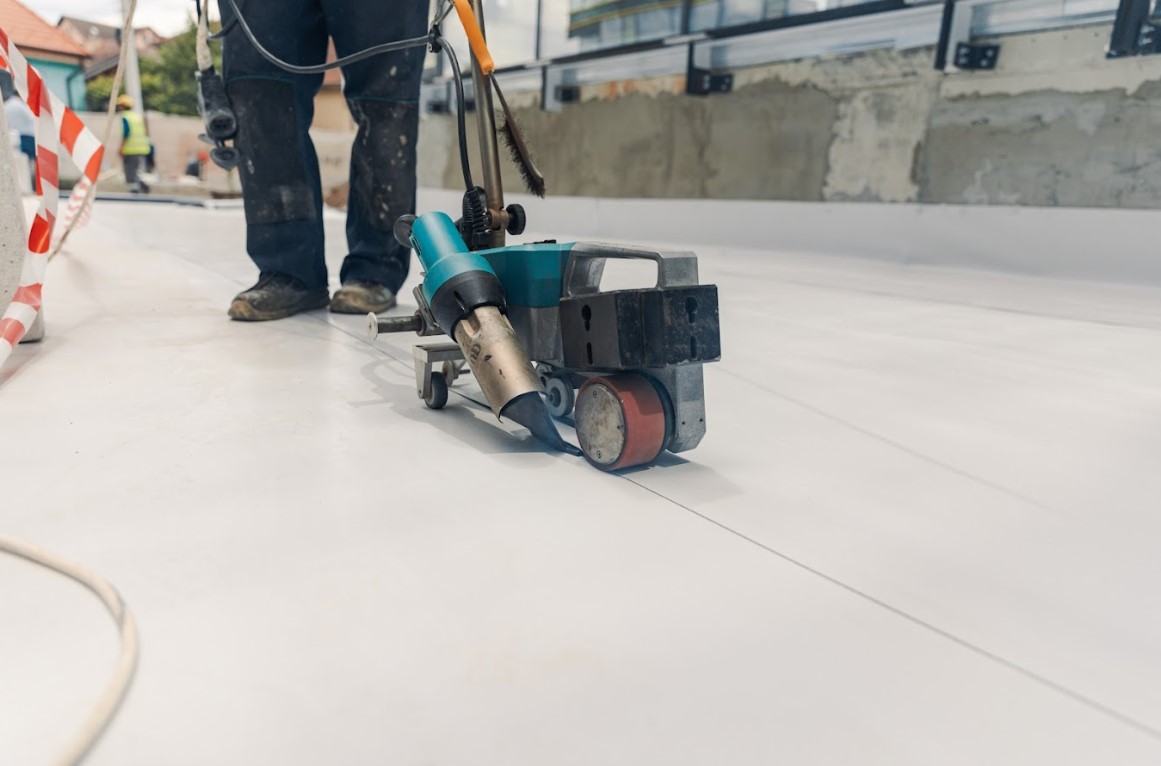
Let's be honest about what "DIY-friendly" means here. TPO repair is not a hammer-and-nails situation. The professional standard for TPO seams is heat welding — using a hot-air gun to fuse membrane layers together at high temperatures. That equipment is expensive, takes practice to use correctly, and a bad weld is worse than no weld at all because it gives you false confidence while water keeps moving in.
That said, there are legitimate repairs a careful homeowner can handle:
For small punctures — anything roughly the size of a quarter or smaller — a TPO patch kit with lap sealant can seal the breach effectively. Clean the area thoroughly with a TPO membrane cleaner, let it dry completely, apply the patch with firm pressure, and seal the edges with lap caulk rated for TPO membranes. Don't skip the cleaning step. Adhesion on a dirty or oily surface is temporary at best.
For seam edges that have just started to lift, a TPO-compatible seam primer and lap sealant can buy time and stop water intrusion at that spot. This is a short-term solution, not a permanent fix — but it's better than leaving a lifted seam open heading into a rainy season.
What you should not attempt yourself: any repair involving a seam that has opened more than a few inches, membrane that has torn across a large area, flashing that has completely separated, or any situation where you suspect water is already underneath the membrane. Those repairs require heat welding, proper re-flashing, or full section replacement — and doing them wrong creates more damage, not less.
What tools and materials do you need for basic TPO repairs?
The right supplies make the difference between a repair that holds and one that fails by the next rainstorm.
Before you start any repair, make sure you have:
- TPO membrane patches cut from matching material or a patch kit designed for TPO
- TPO membrane cleaner or isopropyl alcohol to prep the surface
- TPO lap sealant or termination bar caulk for sealing edges
- A hard rubber roller to press patches firmly and remove air pockets
- A utility knife for trimming patches cleanly
- Gloves, safety glasses, and soft-soled shoes for working on the roof
Everything you use needs to be specifically rated for TPO. EPDM products, generic roof caulks, and rubberized coatings are not compatible and can actually prevent proper adhesion if you ever need a professional weld on that spot later.
TPO Truths: Answers to the Questions We Hear Most
How long does a TPO roof typically last?
A properly installed and maintained TPO roof lasts between 20 and 30 years. Lifespan depends heavily on membrane thickness — 45 mil, 60 mil, and 80 mil are the most common options — as well as installation quality and how well drainage is maintained. Thicker membranes hold up longer under foot traffic and weathering.
Can TPO be coated to extend its life?
Yes. Elastomeric roof coatings designed for single-ply membranes can be applied to an aging TPO roof to extend its life, improve reflectivity, and seal minor surface wear. This is a solid option when the membrane is still largely intact but showing its age. A roofing professional can assess whether your TPO is a good candidate for coating or whether replacement makes more financial sense.
Is TPO better than EPDM for flat roofs?
Both are reliable single-ply systems, and the better choice depends on your priorities. TPO reflects heat more effectively, making it the smarter pick in warm climates. EPDM — the black rubber membrane you may have seen on older buildings — has a longer track record and can be easier to repair in some situations. In Georgia's climate, TPO's reflectivity makes it a popular first choice.
How much does professional TPO repair typically cost?
Minor repairs like patching a puncture or re-sealing a seam edge might run anywhere from a couple hundred dollars to around five hundred, depending on accessibility and scope. More involved repairs — re-flashing a penetration, replacing a section of membrane, addressing ponding water issues — can range higher. Getting a proper inspection and written estimate from a qualified roofer is always worth it before the problem grows.
Flat Roof, Solid Future: Let's Keep Water Where It Belongs.
A TPO roof that's looked after is a roof that works hard for you year after year. The fixes you make today — even the small ones — are the reason you're not dealing with a saturated ceiling or a full roof replacement five years from now. That's not an exaggeration. Flat roof maintenance is genuinely one of the highest-return investments you can make in your home.
If you're in Cumming, GA or the surrounding areas and your TPO roof needs more than a DIY patch — or if you're simply not sure what you're dealing with — reach out to Roofscape. Their team knows flat roofing inside and out, and they'll give you a straight assessment without the upsell. Good work, honest answers, and repairs that actually hold.
Contact Roofscape today and let's make sure your flat roof is ready for whatever comes next.
Recent Articles
Residential Roofing
How to Repair a TPO Roof: DIY Tips for Flat Roof Fixes
Regular inspection and roof repair are best things to do to extend the life of a TPO roof. When in doubt, a professional assessment costs far less than the water damage that follows a failed repair.
March 27, 2026
.png)
CDX Plywood vs. OSB: What’s Best for Roof Sheathing?
CDX plywood vs. OSB: compare cost, moisture resistance, durability, and performance. Learn which roof sheathing is best for your climate, budget, and long-term roofing needs.
March 26, 2026

Residential Roofing
What Are Roof Scuppers? A Guide to Flat Roof Drainage
Most people have heard of gutters and downspouts. Far fewer have heard of roof scuppers, on a flat roof scuppers might be doing more work to protect your building than any other single component.
March 20, 2026

Rafters vs. Trusses: Which Roof Framing Is Best for Your Build?
Rafters vs. trusses: compare cost, design flexibility, installation speed, and attic space. Learn which roof framing system fits your build, budget, and long-term goals.
March 19, 2026